Pin en Ceci N'est Pas Une Pipe

The Tune and Also the Words. 1964. René Magritte first conceived this famous image in oil on canvas in 1929, when he was most interested in the relationship between words and pictures. In this work from 1964, Magritte revisited the image, in gouache. "Ceci n'est pas une pipe" (This is not a pipe) articulates that the reproduction of the.
René Magritte, El imperio de las luces
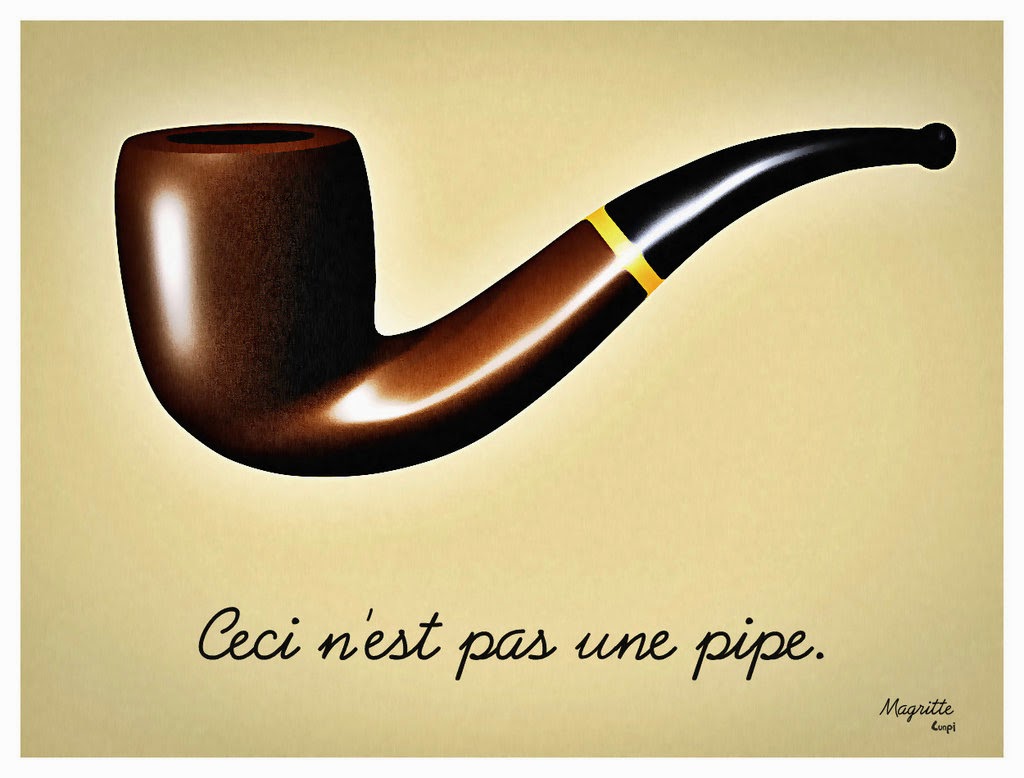
Magritte also created a black and white etching titled, Ceci n'est pas une pipe (L'air et le chanson) (1962). It measures 11.5 by 14.7 centimeters. It depicts Magritte's pipe as the central image with the famous words in French "Ceci n'est pas une pipe", otherwise in English, "This is not a pipe".
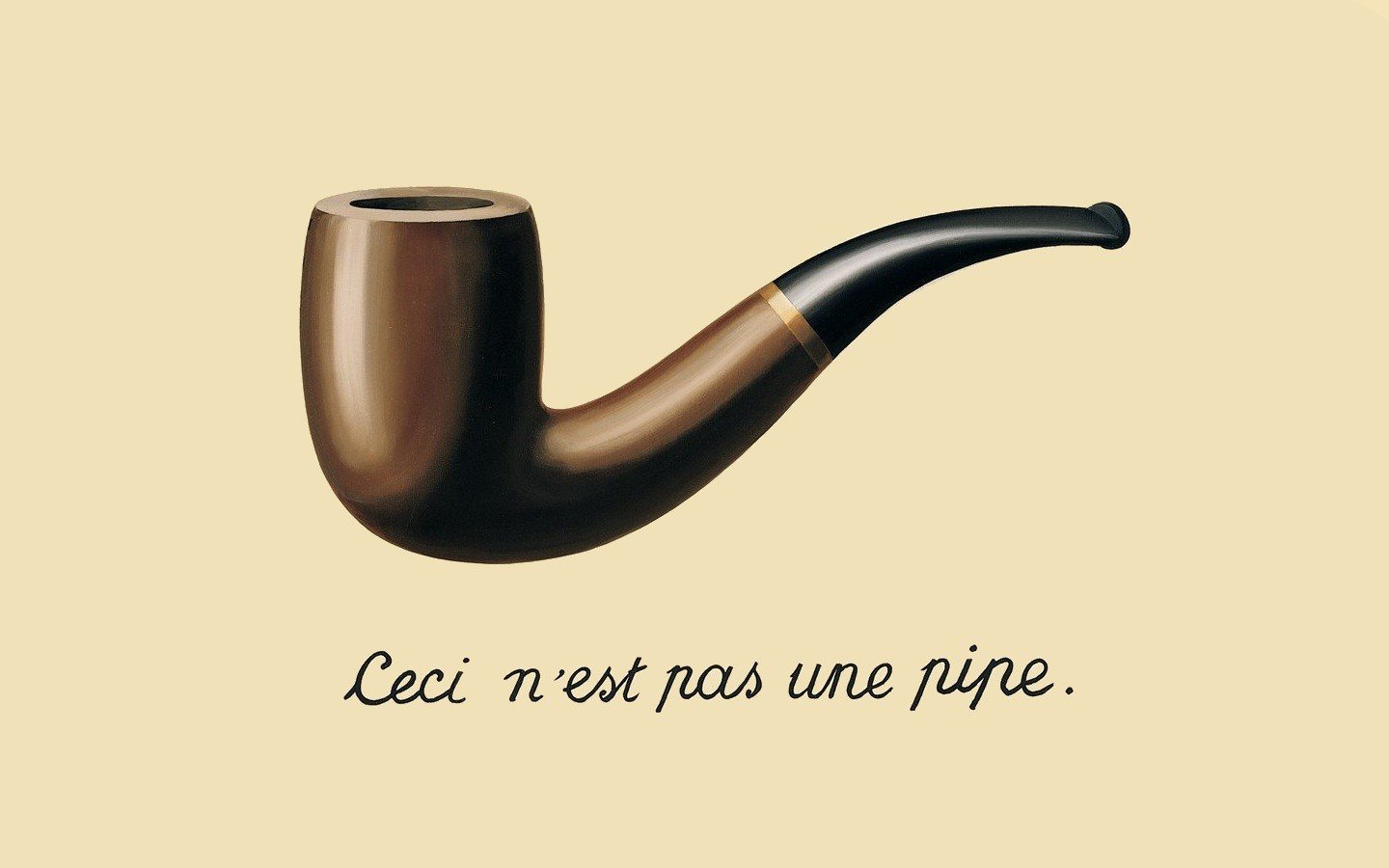
pipes, René Magritte, Painting, Minimalism HD Wallpapers / Desktop and Mobile Images & Photos
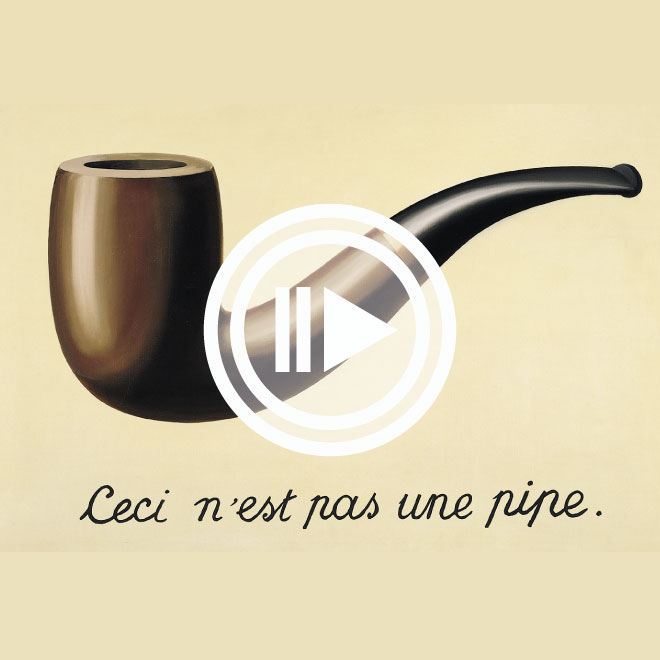
Magritte, The Treachery of Images (Ceci n'est pas une pipe) René Magritte, The Treachery of Images (Ceci n'est pas une pipe), 1929 (LACMA) Speakers: Dr. Beth Harris, Dr. Steven Zucker. Created by Beth Harris and Steven Zucker.
Magritte Ceci n'est pas une pipe L'uso della parola I (1929) YouTube

La trahison des images (wörtlich: „Der Verrat der Bilder") ist eines der bekanntesten Bilder von René Magritte.Es entstand 1929, ist ein 60,33 × 81,12 cm großes Ölbild und befindet sich heute im Los Angeles County Museum of Art.Abgebildet ist eine Pfeife, darunter ist der Schriftzug „Ceci n'est pas une pipe." (anhören ⓘ /?, französisch für „Dies ist keine Pfeife.") zu.
René Magritte, La trahison des images (Ceci n'est pas une pipe), 1929, Los Angeles County Museum

This painting, originally entitled, and captioned, 'Ceci n'est pas une pomme', was painted in 1964, just three years before the artist's death. It is painted in oil on unilite, and measures 141.7cm by 100.8cm. The work was auctioned in London by Christies in February 2013 as part of their 'The Art of the Surreal' sale, and was sold for almost.
René Magritte Ceci n'est pas une pipe Museum TV
Below it, Magritte painted, "Ceci n'est pas une pipe" French for "This is not a pipe." The painting is not a pipe, but rather an image of a pipe, This masterpiece of Surrealism creates a three-way paradox out of the conventional notion that objects correspond to words and images. The Treachery of Images belongs to a series of word-image.
The Treachery of Images, 1929 The Treachery of Images, 2022 René Magritte lacma r
René Magritte, The Treachery of Images (Ceci n'est pas une pipe) Salvador Dalí. The Persistence of Memory; Metamorphosis of Narcissus. Alberto Giacometti, The Palace at 4 a.m. Hans Bellmer, The Doll/La Poupée; Meret Oppenheim, Object (Fur-covered cup, saucer, and spoon) German & Italian art between the wars. Browse this content; Prints and.
magritte/Magritte pipe and pipe exam
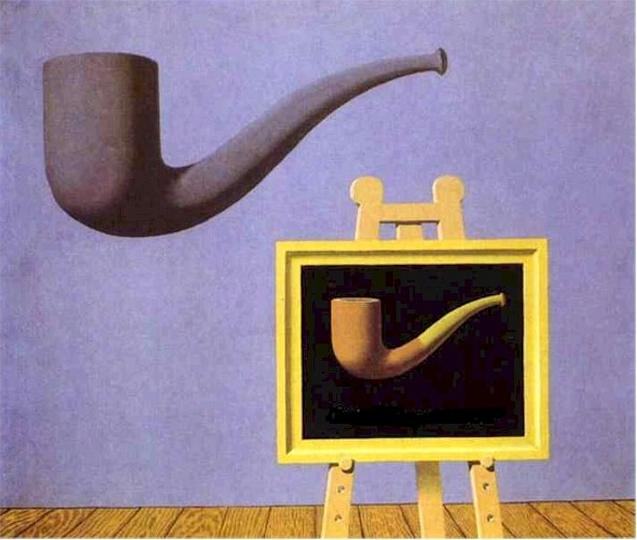
Ceci n'est pas e pipe. / ceci n'est pas une pipeI. Third disturbance: Magritte has what it was speaking about. But the. accustomed to pay attention to that narrow book which runs above the words and. a common frontier for their incessant millimeters of whiteness, on the calm designation, nomination, description, shapes.
The Magritte machine. Museo Nacional ThyssenBornemisza
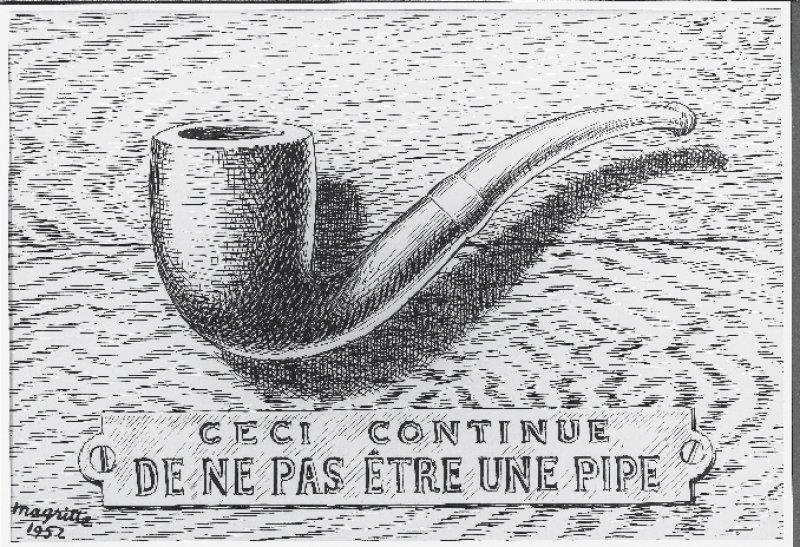
The Treachery of Images (This is Not a Pipe) (La trahison des images [Ceci n'est pas une pipe]), René Magritte (Belgium, 1898-1967), Belgium, 1929, Paintings, Oil on canvas.
Art History for children Renè Magritte "Ceci n'est pas une pipe" YouTube
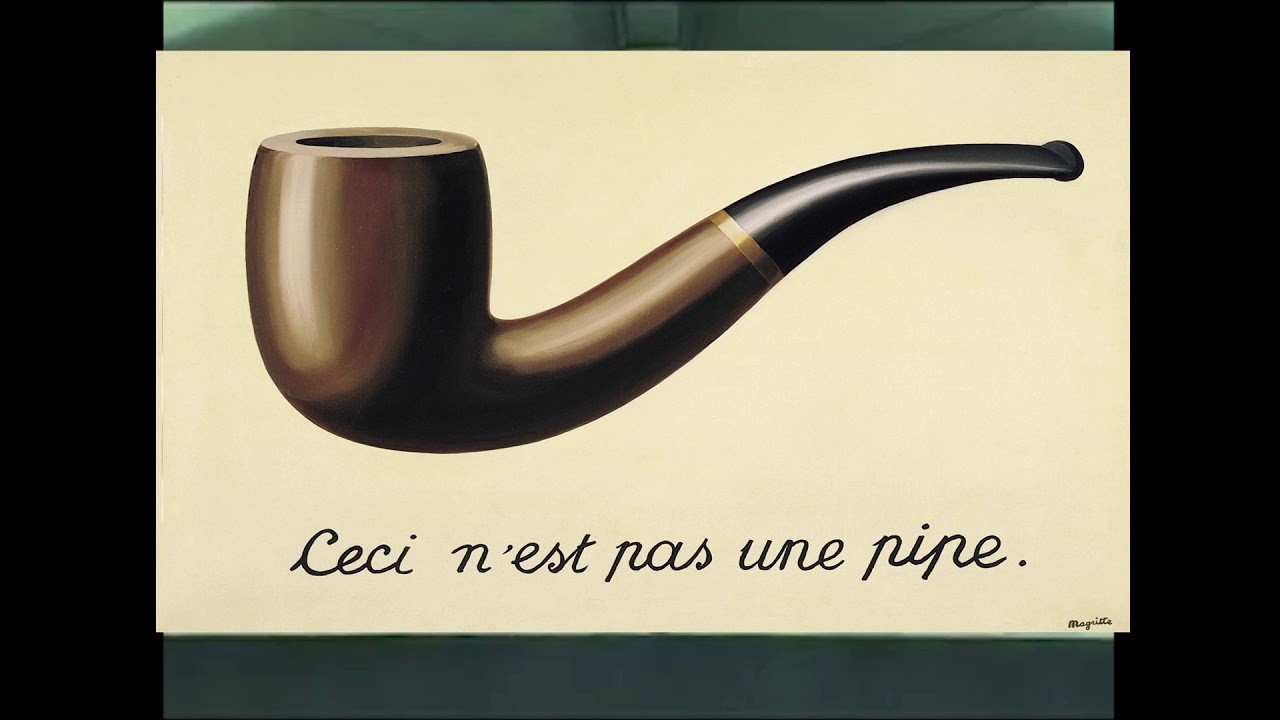
MICHEL FOUCAULT (1926 - 1984) PART THREE This is not a Pipe (1968) Michel Foucault's essay, This is not a Pipe, his contemplation on a famous painting by René Magritte, La trahison des images (Ceci n'est pas une pipe) (1929) can be read as a follow-up to his earlier analysis of the much larger painting by Diego Velasquez, Las Meninas (1656).
Brillant Empfindlich Volumen magritte c est ne pas une pipe Zugriff Randalieren überzeugen
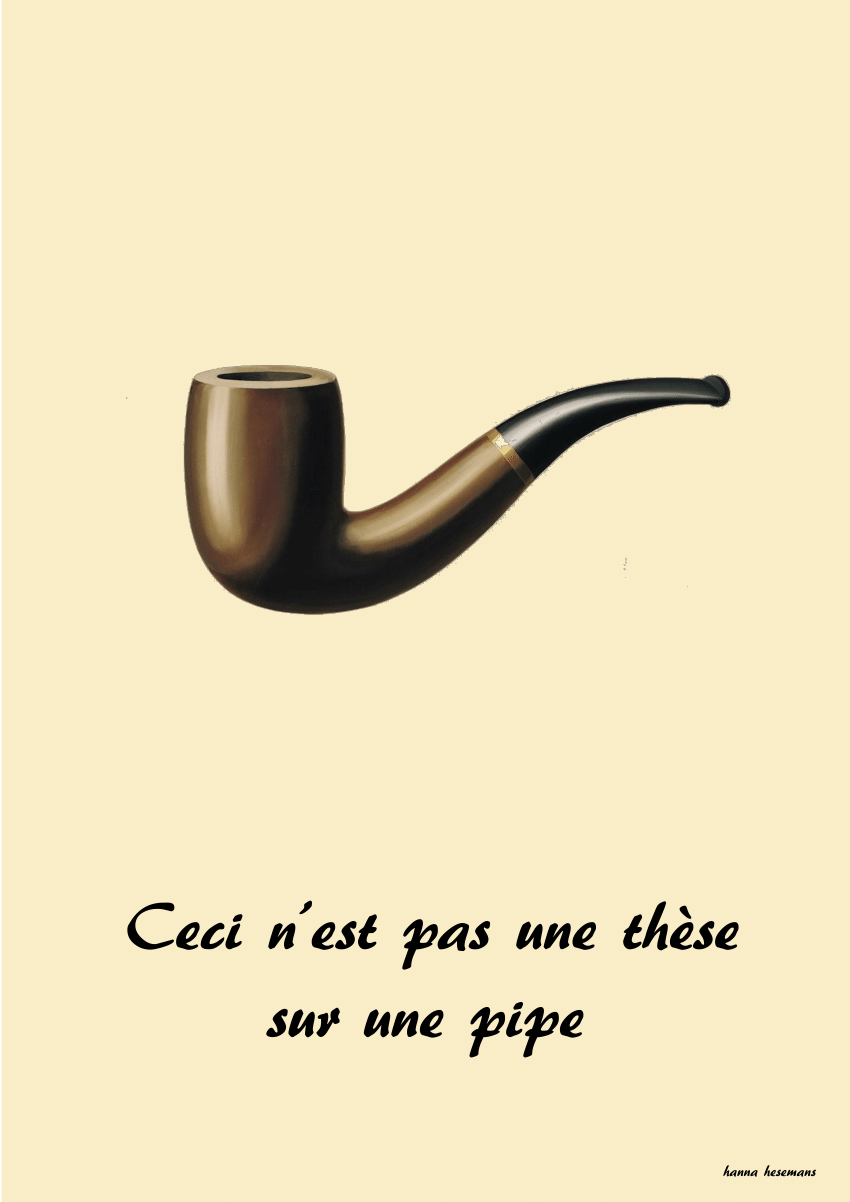
Irony is not the only concept I picked up while attempting to understand the painting, "this is not a pipe". We must point out the whimsical relationship between an object and it's name. It is Magritte's way of explaining that an image is not to be confused as a tangible object. The artist does not want us to see his work as anything.
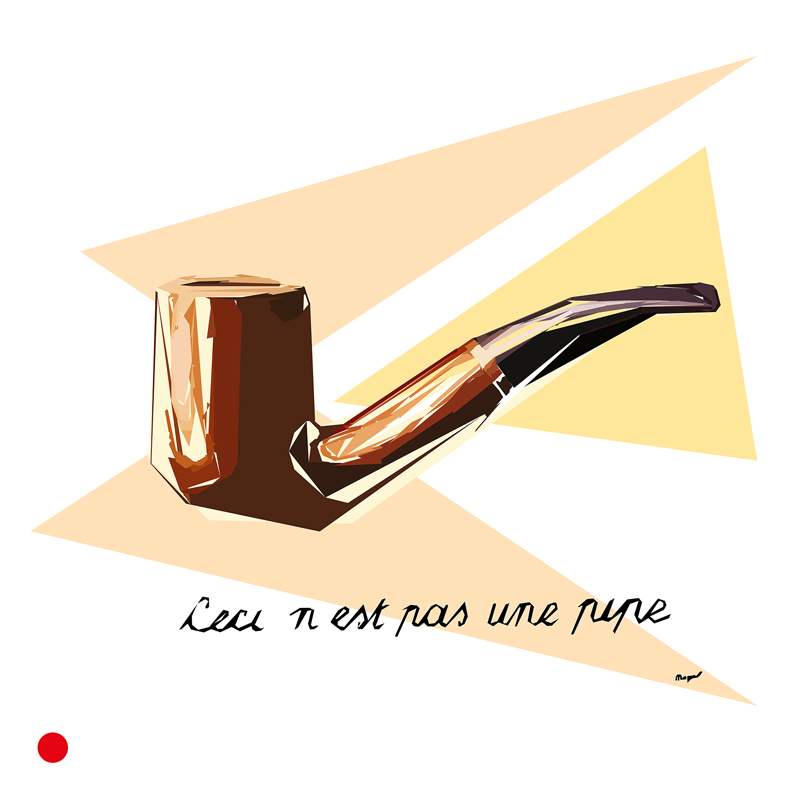
Remake et appropriation du tableau “Ceci n’est pas une pipe” ou la trahison des images de René
Learn about this topic in these articles: discussed in biography. In René Magritte.of his most famous pieces, The Treachery of Images (1929), in which a detailed representation of a pipe is combined with the cursive statement: Ceci n'est pas une pipe ("This is not a pipe"). The painting questioned the authority of both images and words. Read More
"Ceci n'est pas une pipe" van René Magritte voor het eerst sinds 1971 in België te zien VRT NWS
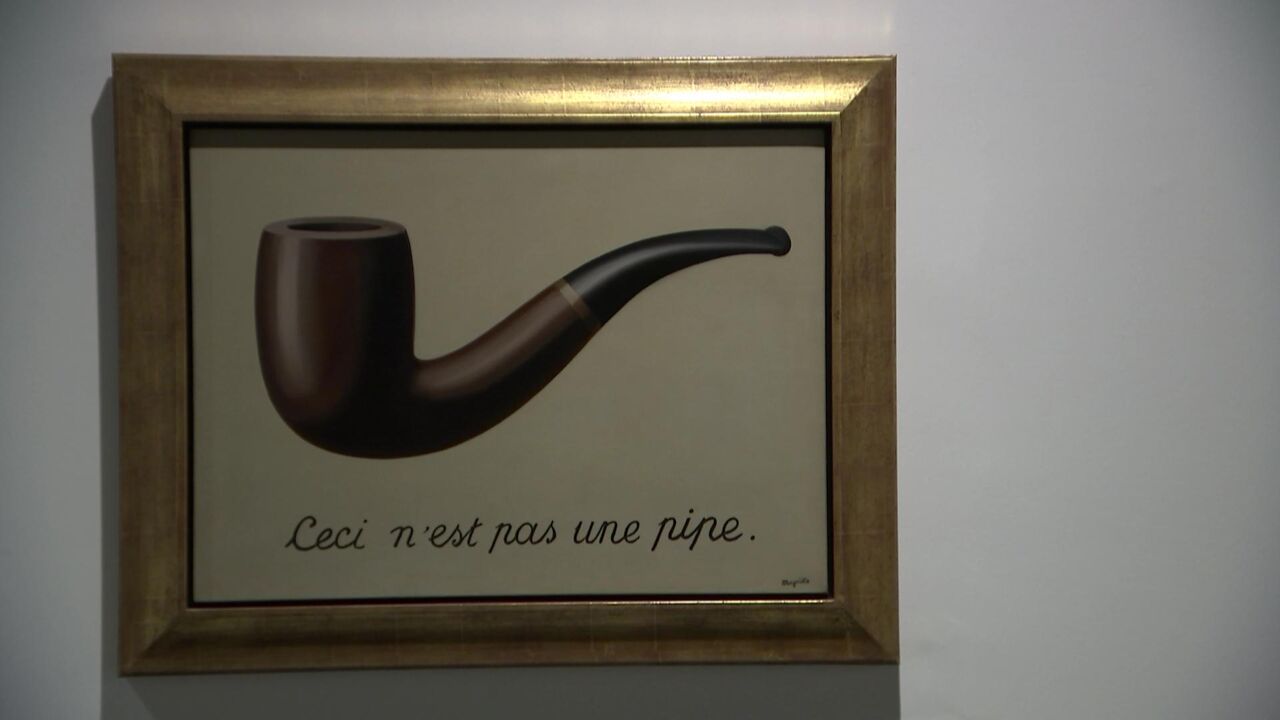
Il tradimento delle immagini (Questo non è una pipa) (in francese: La trahison des images, o Ceci n'est pas une pipe ascolta ⓘ) è un dipinto a olio su tela (60,3×81,1 cm) di René Magritte, realizzato nel 1929 e conservato nel Los Angeles County Museum of Art. L'opera, contestando la raffigurazione della pipa (non si tratta di fatto di una pipa, bensì di una sua immagine), mira a mettere.
Résultats Google Recherche d'images correspondant à

The Treachery of Images (This is Not a Pipe) (La trahison des images [Ceci n'est pas une pipe]), 1929.. The Treachery of Images (This is Not a Pipe) (La trahison des images [Ceci n'est pas une pipe]), 1929. René Magritte Belgium, 1898-1967 Oil on canvas Purchased with funds provided by the Mr. and Mrs. William Preston Harrison.
René Magritte Germann Auctionhouse Zurich

This is Not a Pipe is a painting by famous Belgium artist René Magritte. The work shows a pipe, but below it, the artist there is a quote by the artist in French " Ceci n'est pas une pipe ," which when translated to English, means " This is not a pipe .". The work was created in 1929 but still puzzles many viewers to this date.
Réné Magritte "Ceci n'est pas une pipe" Auto Jaune Blog

Magritte likely borrowed the pipe motif from Le Corbusier's book 'Vers une architecture' (1923), since he was admirer of the architect and painter, but he may also have been inspired by a comical sign he knew in an art gallery, which read, "Ceci n'est pas de l'Art." The painting is the subject of a famous book-length analysis by Michel Foucault.
.

:quality(80)/cdn-kiosk-api.telegraaf.nl/63611f26-7d2f-11ed-93a3-02c309bc01c1.jpg "Denemarken dreigt boeren hard te raken met ’zeer hoge’ CO2heffing Financieel Telegraaf.nl")